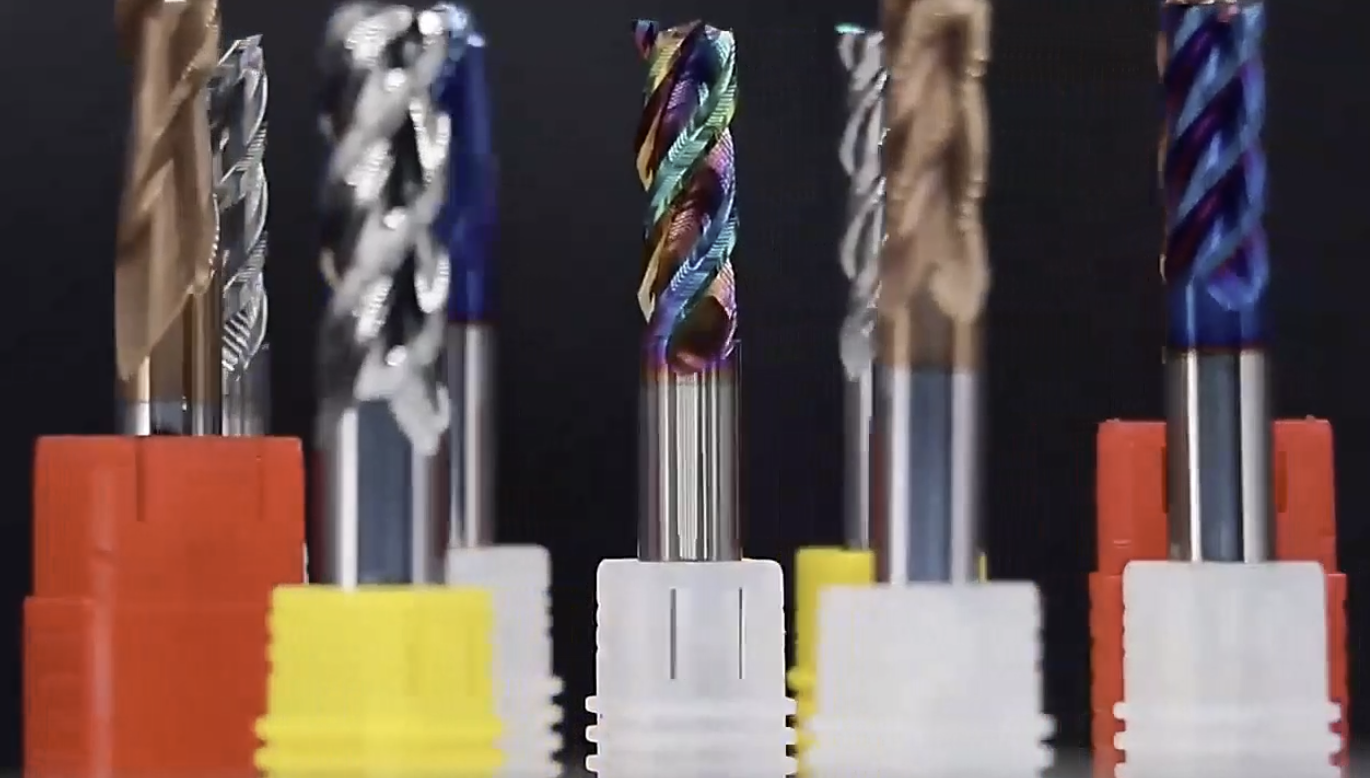
Choosing the right cutting tool is one of the most important factors affecting CNC machining efficiency, surface finish, and production costs. Among various CNC cutting tools, carbide end mills are widely used because of their excellent hardness, wear resistance, and ability to maintain stable performance under high-speed machining conditions.
However, selecting the suitable carbide end mill is not always simple. Different materials, machining operations, cutting speeds, and surface requirements require different tool designs. A tool that works well for aluminum machining may not be suitable for hardened steel or mold manufacturing.
This guide explains how to choose the right carbide end mill for CNC machining, including flute number, coating, diameter, cutting materials, and application requirements. It will help CNC manufacturers, machining companies, and industrial buyers select the most suitable cutting tools for their production needs.
Key Takeaways
Carbide end mills provide higher hardness and longer tool life compared with traditional HSS tools.
The best end mill depends on the workpiece material, machining method, and required surface quality.
Flute number directly affects chip removal, cutting efficiency, and finishing performance.
Coating selection improves wear resistance and machining stability.
A carbide end mill is a rotary cutting tool mainly used in CNC milling machines to remove material from a workpiece. Unlike traditional high-speed steel (HSS) tools, carbide end mills are manufactured using solid carbide material, which provides higher hardness and better resistance to heat and wear.
A typical carbide end mill consists of:
Component
Function
Cutting Edge
Removes material during machining
Flute
Controls chip evacuation
Shank
Connects the tool to CNC equipment
Coating
Improves wear resistance and tool performance
Because of their excellent mechanical properties, carbide end mills are commonly used in:
Mold manufacturing
Automotive components
Aerospace parts
Medical device machining
Precision CNC machining
2. Why Choose Carbide End Mills for CNC Machining?
Compared with HSS cutting tools, solid carbide end mills offer several advantages.
Feature
Carbide End Mill
HSS Tool
Hardness
Higher hardness
Lower hardness
Cutting Speed
High-speed machining
Limited speed
Wear Resistance
Excellent
Moderate
Tool Life
Longer service life
Shorter
Precision
Higher accuracy
Lower stability
For manufacturers requiring continuous production and high machining accuracy, carbide tools can significantly reduce tool replacement frequency and improve overall productivity.
3. Consider the Workpiece Material First
The first step in selecting a carbide end mill is identifying the material being machined.
Different materials have different hardness levels and cutting characteristics.
Aluminum Machining
For aluminum alloys, efficient chip evacuation is essential to prevent chip buildup and improve machining performance. 2-flute and 3-flute carbide end mills are commonly used for aluminum machining, with 3-flute end mills offering an excellent balance between chip evacuation, cutting efficiency, and surface finish.
Recommended features:
Sharp, polished cutting edges
2 or 3 flutes for efficient chip evacuation
Large chip gullets to reduce material buildup
Polished flute surfaces for smoother chip flow
High-speed cutting capability
Carbide construction for excellent wear resistance
Single-flute end mills are more commonly selected for non-metallic materials such as acrylic, PVC, plastics, and wood, where large chip clearance is particularly important. 4-flute end mills are generally used as versatile options for materials such as steel, cast iron, and stainless steel.
Steel Machining
Steel requires carbide end mills with higher wear resistance.
Recommended features:
3 or 4 flute design
Wear-resistant coating
Strong cutting edge
Higher hardness grade
Hardened Steel and Mold Steel
For hardened materials, manufacturers usually choose carbide end mills designed for high hardness machining.
Recommended features:
HRC55-HRC65 capability
Nano coating technology
High rigidity design
Precision grinding
4. Select the Right Number of Flutes
The number of flutes is one of the most important factors when choosing a carbide end mill.
Flute Number
Application
Advantages
1-2 Flute
Aluminum, soft materials
Excellent chip removal
3 Flute
General CNC machining
Balance between cutting speed and evacuation
4 Flute
Steel, finishing machining
Better surface quality
5-6 Flute
High-efficiency machining
Higher productivity
Single Flute End Mill
A single flute cutter is especially suitable for:
Aluminum machining
Acrylic processing
Wood and plastic machining
CNC router applications
The large flute space allows chips to escape quickly and prevents overheating.
Multi-Flute End Mill
Multi-flute carbide end mills are better for:
Steel machining
Finishing operations
High precision mold machining
5. Choose the Correct End Mill Geometry
Different machining operations require different tool designs.
Selecting the correct coating can significantly improve machining performance.
7. Choose the Right Cutting Diameter and Length
Tool size affects machining stability.
Diameter Selection
Large diameter tools:
Higher rigidity
Better for rough machining
Higher material removal rate
Small diameter tools:
Better for detailed machining
Suitable for narrow areas
Used in precision applications
Length Selection
Shorter tools generally provide:
Higher rigidity
Less vibration
Better surface finish
Long neck or extended-length end mills are useful for:
Deep cavities
Mold machining
Hard-to-reach areas
8. Carbide End Mill Selection Guide
Machining Requirement
Recommended Carbide End Mill
Aluminum machining
Single flute / 2 flute carbide end mill
Steel machining
3 flute / 4 flute end mill
Hardened steel
HRC55-HRC65 carbide end mill
Mold cavity machining
Ball nose end mill
Precision parts
Micro carbide end mill
Deep cavity machining
Long neck end mill
9. Common Mistakes When Choosing Carbide End Mills
Mistake 1: Choosing Only Based on Price
Low-cost tools may have:
Poor grinding accuracy
Short tool life
Unstable machining performance
A higher-quality carbide end mill can reduce overall machining costs.
Mistake 2: Using the Same Tool for Different Materials
A tool designed for aluminum may fail when machining hardened steel.
Always match:
Tool geometry
Coating
Carbide grade
Flute design
with the workpiece material.
Mistake 3: Ignoring CNC Machine Conditions
Tool selection should consider:
Machine rigidity
Spindle speed
Feed rate
Cooling method
The same carbide end mill may perform differently on different CNC machines.
10. How to Choose a Reliable Carbide End Mill Manufacturer?
When purchasing carbide cutting tools, manufacturers should evaluate suppliers based on:
Product Quality
Check:
Carbide material grade
Grinding accuracy
Tool inspection process
Customization Capability
A professional supplier should provide:
Custom diameter
Special flute design
OEM production
Customized coating
Industry Experience
Experienced carbide tool manufacturers understand different machining applications and can recommend suitable solutions.
A reliable solid carbide end mill supplier can help customers improve machining efficiency and reduce production costs.
FAQ About Carbide End Mills
1. What is the best carbide end mill for CNC machining?
The best carbide end mill depends on the machining material and operation. Aluminum usually requires single or two flute tools, while steel machining often needs multi-flute carbide end mills.
2. How long does a carbide end mill last?
Tool life depends on material hardness, cutting parameters, coating, and machining conditions. Proper tool selection can significantly extend service life.
3. Are carbide end mills better than HSS tools?
Yes. Carbide end mills provide higher hardness, better wear resistance, and allow faster cutting speeds compared with HSS tools.
4. What carbide end mill is suitable for aluminum?
Single flute and two flute carbide end mills are commonly used for aluminum because they provide efficient chip removal and smooth cutting performance.
5. Can carbide end mills machine hardened steel?
Yes. Specialized carbide end mills with suitable coatings and high hardness grades can machine hardened steel materials such as HRC55-HRC65 steel.
Conclusion
Selecting the right carbide end mill for CNC machining requires careful consideration of material type, machining operation, flute design, coating, and tool dimensions. The correct cutting tool can improve machining accuracy, increase productivity, and reduce manufacturing costs.
For CNC manufacturers looking for stable and high-performance cutting solutions, choosing an experienced carbide end mill manufacturer is essential. With professional tool design, customized options, and strict quality control, the right carbide end mill can provide reliable performance across various industrial applications.
About The Author
Chenyang Zhang | Chief Engineer at Hongjian Tools
I’m Chenyang Zhang, Chief Engineer at Hongjian Tools. I oversee R&D, process optimization and quality control for solid carbide end mills, drills and other precision CNC cutting tools. Drawing on years of hands-on machining experience, I continuously optimize tool materials, cutting geometries and production workflows to develop stable, durable cutting tools for machining steel, stainless steel and aluminum. I started this blog to share practical advice on end mill selection, cutting parameter setup, and fixes for typical machining problems including tool chipping, chatter vibration, poor chip evacuation and unsatisfactory surface finishes. In my opinion, pairing the right cutting tools with proper machining strategies helps manufacturers improve productivity, prolong tool service life and cut overall production costs.
 English
 العربية
 Français
 Русский
 Español
 Português
 Deutsch
 italiano
 日本語
日本語 한국어
한국어 Nederlands
 Tiếng Việt
 ไทย
ไทย Polski
 Türkçe
 ພາສາລາວ
 ភាសាខ្មែរ
 Bahasa Melayu
 ဗမာစာ
ဗမာစာ Filipino
 Bahasa Indonesia
 magyar
 Română
 Čeština
 Монгол
 қазақ
қазақ Српски
 हिन्दी
 فارسی
فارسی Slovenčina
 Slovenščina
 Norsk
Norsk Svenska
 українська
 Ελληνικά
 Suomi
Suomi Հայերեն
 עברית
עברית Latine
 Dansk
Dansk বাংলা
বাংলা Hrvatski
 Gaeilge
 Oʻzbekcha
 latviešu
 Беларуская мова
 Български
 Lietuvių
 Gaelo Albannach
 ئۇيغۇرچە
 Cymraeg