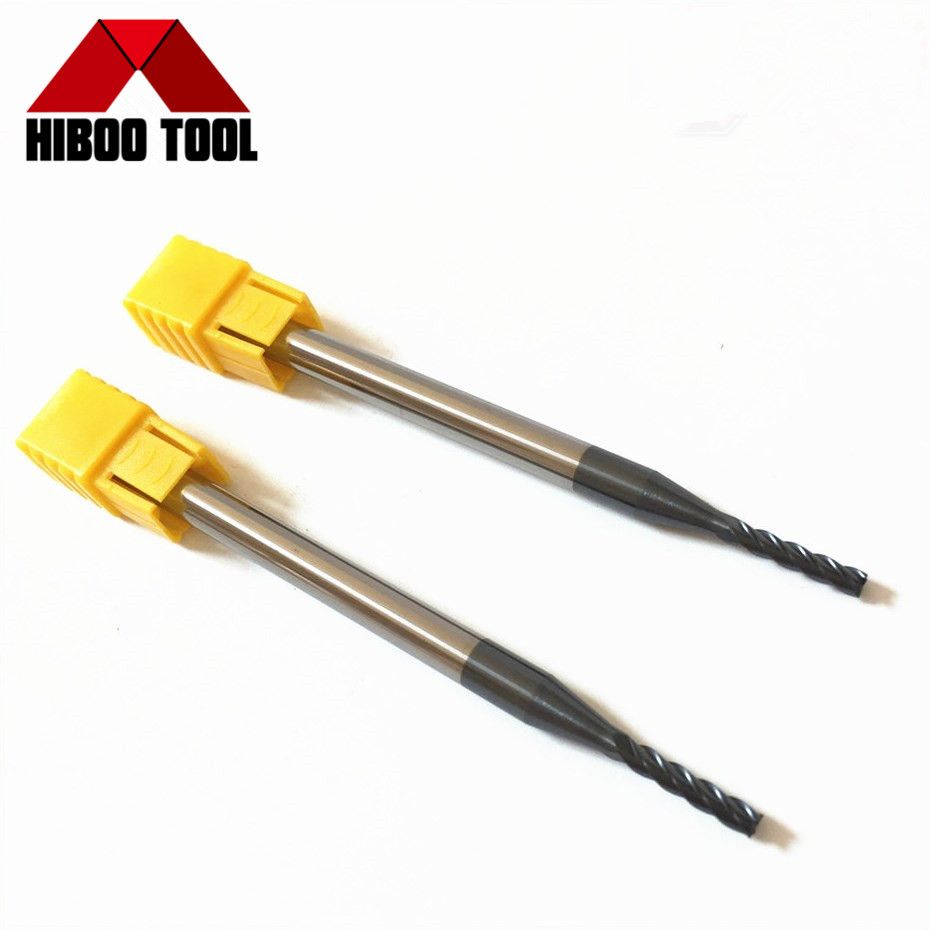
Selecting the right cutting tool is one of the most important decisions in CNC machining. Whether you're producing aerospace components, automotive parts, precision molds, or medical devices, the performance of your cutting tool directly affects machining accuracy, productivity, and manufacturing costs.
Among all milling tools available today, the solid carbide end mill has become the preferred choice for professional manufacturers because of its exceptional hardness, wear resistance, and machining precision. Compared with conventional high-speed steel (HSS) tools, solid carbide tools can operate at significantly higher cutting speeds while maintaining superior dimensional accuracy and longer tool life.
As industries continue to demand tighter tolerances, higher productivity, and improved surface finishes, solid carbide end mills have become indispensable in modern CNC machining centers.
In this comprehensive guide, you'll learn:
What a solid carbide end mill is
Why it outperforms HSS tools
Different types of solid carbide end mills
Which materials they can machine
How to choose the right cutter
Which coatings perform best
How to maximize tool life
Why selecting the right manufacturer matters
Whether you're a purchasing manager, CNC programmer, tooling engineer, or machine shop owner, this guide will help you make informed tooling decisions.
Key Takeaways
Before diving deeper, here are the most important facts about solid carbide end mills:
Solid carbide end mills are manufactured from a single piece of tungsten carbide, providing outstanding rigidity and wear resistance.
They offer significantly longer tool life than traditional HSS end mills.
They are suitable for machining steel, stainless steel, cast iron, aluminum, titanium, hardened steel, and many difficult-to-machine materials.
Multiple geometries—including square end mills, ball nose end mills, corner radius end mills, and roughing end mills—allow manufacturers to optimize performance for different applications.
Proper selection of flute number, coating, helix angle, and cutting parameters can dramatically improve machining efficiency.
Working with an experienced solid carbide end mill manufacturer ensures consistent quality, stable performance, and customized tooling solutions.
What Is a Solid Carbide End Mill?
A solid carbide end mill is a precision rotary cutting tool manufactured entirely from solid tungsten carbide. Unlike brazed or indexable milling cutters, the entire body and cutting edges are made from a single carbide blank, resulting in exceptional rigidity, wear resistance, and dimensional stability.
These tools are primarily used in CNC milling machines and machining centers to perform operations such as:
Face milling
Side milling
Slotting
Pocket milling
Contour machining
3D surface machining
Profiling
Finishing
Because carbide is significantly harder than high-speed steel, solid carbide end mills maintain sharp cutting edges even under high cutting temperatures and heavy machining conditions.
This allows manufacturers to increase spindle speeds, improve productivity, and achieve superior surface finishes without sacrificing tool life.
How Does a Solid Carbide End Mill Work?
During machining, the rotating cutter removes material through multiple precision-ground cutting edges, known as flutes. As the tool rotates at high speed, each flute shears away small amounts of material while evacuating chips from the cutting zone.
The geometry of the cutter—including flute count, helix angle, cutting edge preparation, and coating—determines its performance in different materials.
For example:
Two-flute designs provide excellent chip evacuation for aluminum.
Four-flute tools offer higher rigidity for steel machining.
Variable helix geometries reduce vibration during high-speed cutting.
Nano-coated tools improve wear resistance when machining hardened steels.
This combination of advanced geometry and carbide material enables modern solid carbide end mills to achieve remarkable cutting performance.
Solid Carbide End Mill vs. HSS End Mill
Many manufacturers still use high-speed steel tools for general machining. However, as production demands increase, solid carbide tools have become the preferred solution for higher precision and productivity.
Feature
Solid Carbide End Mill
High-Speed Steel End Mill
Material
Solid Tungsten Carbide
High-Speed Steel
Hardness
Extremely High
Moderate
Wear Resistance
Excellent
Average
Heat Resistance
Excellent
Limited
Cutting Speed
Very High
Low to Medium
Surface Finish
Superior
Good
Tool Life
Much Longer
Shorter
Precision
Excellent
Moderate
Cost
Higher Initial Cost
Lower Initial Cost
Overall Cost per Part
Lower
Higher
Although solid carbide end mills typically require a higher initial investment, their extended service life, reduced downtime, and improved machining efficiency often result in significantly lower machining costs over time.
For high-volume production environments, carbide tooling generally delivers the best return on investment.
Why Are Solid Carbide End Mills So Popular?
Several key advantages explain why solid carbide end mills dominate today's precision machining industry.
Exceptional Hardness
Tungsten carbide is considerably harder than high-speed steel, enabling tools to maintain sharp cutting edges under demanding machining conditions.
Longer Tool Life
Reduced wear means fewer tool changes, lower tooling costs, and increased machine uptime.
Higher Cutting Speeds
Solid carbide end mills can operate at substantially higher spindle speeds, allowing manufacturers to improve production efficiency without compromising quality.
Excellent Surface Finish
The rigidity of carbide minimizes tool deflection, producing smoother surfaces and tighter dimensional tolerances.
Better Dimensional Accuracy
High stiffness ensures stable cutting performance, particularly during long machining cycles or when machining hardened materials.
Wide Material Compatibility
Modern solid carbide end mills can machine a broad range of materials, including:
Carbon steel
Alloy steel
Stainless steel
Cast iron
Tool steel
Hardened steel
Aluminum alloys
Copper alloys
Titanium alloys
Nickel-based superalloys
This versatility makes them an essential tool in industries ranging from mold manufacturing to aerospace engineering.
Types of Solid Carbide End Mills
Not all solid carbide end mills are designed for the same machining tasks. Different cutter geometries are optimized for specific materials, cutting conditions, and finishing requirements. Understanding these differences helps manufacturers maximize machining efficiency and tool life.
1. Square End Mills
Square end mills feature a flat cutting end with sharp 90-degree corners. They are the most versatile type of solid carbide end mill and are widely used for:
Slot milling
Shoulder milling
Pocket machining
Side milling
General-purpose CNC machining
Square end mills produce flat-bottomed grooves and are suitable for most machining operations involving steel, stainless steel, aluminum, and cast iron.
2. Ball Nose End Mills
Ball nose end mills have a hemispherical cutting tip that allows smooth contouring and 3D surface machining. They are commonly used in:
Mold and die manufacturing
Aerospace components
Turbine blades
Medical implants
Precision engraving
Complex curved surfaces
Their rounded geometry enables excellent surface finishes while reducing tool marks on intricate parts.
3. Corner Radius End Mills
Corner radius end mills combine the strength of a square end mill with rounded corner edges. This design minimizes edge chipping and distributes cutting forces more evenly.
Typical applications include:
High-speed machining
Heavy roughing
Die and mold production
Long production runs
Compared with square end mills, corner radius tools generally provide longer service life and greater resistance to edge breakage.
4. Roughing End Mills
Roughing end mills feature serrated cutting edges that break chips into smaller segments, reducing cutting forces and improving chip evacuation.
They are ideal for:
High material removal rates
Large workpieces
Forged steel components
Heavy-duty machining
After roughing, a finishing end mill is typically used to achieve the required surface quality.
5. Long Neck End Mills
Long neck solid carbide end mills are designed for deep cavities and hard-to-reach machining areas. Their extended neck provides additional clearance while maintaining cutting precision.
These tools are widely used for:
Deep pocket machining
Mold cavities
Precision finishing
Complex internal features
Which Materials Can a Solid Carbide End Mill Machine?
One of the biggest advantages of a solid carbide end mill is its ability to machine a wide range of materials. By selecting the appropriate geometry, coating, and cutting parameters, manufacturers can achieve outstanding results across different industries.
Workpiece Material
Recommended End Mill
Suggested Coating
Carbon Steel
4-Flute Square End Mill
TiAlN
Alloy Steel
Corner Radius End Mill
AlTiN
Stainless Steel
Variable Helix End Mill
AlCrN
Hardened Steel (HRC50–65)
High-Hardness Ball Nose End Mill
Nano Coating
Cast Iron
Square End Mill
TiAlN
Aluminum Alloy
2-Flute Polished End Mill
Uncoated or DLC
Copper & Brass
2-Flute End Mill
DLC
Titanium Alloy
Variable Pitch End Mill
AlTiN
Nickel-Based Alloys
High-Performance End Mill
Nano Coating
Selecting the correct combination of tool geometry and coating is essential for maximizing cutting performance and extending tool life.
How Do You Choose the Right Number of Flutes?
The number of flutes directly influences chip evacuation, cutting stability, and surface finish.
2-Flute End Mills
Best for:
Aluminum
Copper
Plastics
Soft non-ferrous materials
Advantages:
Excellent chip evacuation
Lower cutting resistance
Higher feed rates
Reduced heat generation
3-Flute End Mills
A balanced option that combines efficient chip evacuation with increased rigidity.
Suitable for:
Aluminum alloys
General-purpose machining
Medium-speed CNC operations
Many manufacturers prefer 3-flute tools for aluminum because they provide higher productivity than traditional 2-flute cutters while maintaining good chip removal.
4-Flute End Mills
The most popular configuration for steel machining.
Recommended for:
Carbon steel
Alloy steel
Stainless steel
Mold steel
Benefits include:
Greater rigidity
Better surface finish
Higher productivity
Improved dimensional accuracy
5- and 6-Flute End Mills
These are designed for high-efficiency finishing and high-speed machining, especially in hardened steels.
Advantages:
Reduced vibration
Increased feed rates
Superior surface quality
Longer tool life
Choosing the Right Helix Angle
The helix angle affects chip evacuation, cutting smoothness, and tool stability.
35° Helix
Suitable for:
General-purpose machining
Carbon steel
Cast iron
Provides balanced cutting performance and versatility.
45° Helix
Ideal for:
Stainless steel
Aluminum
High-speed finishing
The higher helix angle improves chip evacuation and produces a smoother cutting action.
Variable Helix Geometry
Modern high-performance solid carbide end mills often feature variable helix designs.
Benefits include:
Reduced chatter
Lower vibration
Better surface finish
Higher machining stability
Increased tool life
Variable helix end mills are especially effective in high-speed CNC machining centers where precision and stability are critical.
Which Coating Is Best for a Solid Carbide End Mill?
Tool coating significantly impacts wear resistance, heat resistance, and machining efficiency. Choosing the right coating depends on the workpiece material and cutting conditions.
Coating
Best Application
Key Advantages
TiAlN
Carbon steel, alloy steel
Excellent heat resistance and wear resistance
AlTiN
Stainless steel, titanium
High-temperature performance and oxidation resistance
AlCrN
Stainless steel, mold steel
Superior abrasion resistance and longer tool life
Nano Coating
Hardened steel (HRC55–65)
Outstanding hardness and extended tool life
DLC
Aluminum, copper, plastics
Low friction and prevents built-up edge
Uncoated
Aluminum and soft materials
Sharp cutting edge and excellent chip evacuation
For high-speed machining of hardened steels, nano-coated solid carbide end mills are often the preferred choice due to their excellent thermal stability and wear resistance.
Different machining conditions require different tool configurations. By carefully matching tool geometry, flute count, helix angle, and coating to the workpiece material, manufacturers can significantly improve machining efficiency, extend tool life, and achieve consistent, high-quality results.
How to Choose the Right Solid Carbide End Mill
Selecting the right solid carbide end mill involves more than choosing a tool diameter. Factors such as workpiece material, hardness, machining strategy, spindle capability, and desired surface finish all influence cutting performance. A well-matched tool not only improves productivity but also extends tool life and reduces machining costs.
1. Identify the Workpiece Material
Different materials require different cutting geometries and coatings.
Material
Recommended Tool
Aluminum Alloys
2- or 3-Flute Polished End Mill
Carbon Steel
4-Flute Square End Mill
Stainless Steel
Variable Helix End Mill
Hardened Steel
HRC60–HRC65 Ball Nose or Corner Radius End Mill
Cast Iron
4-Flute End Mill with TiAlN Coating
Titanium Alloys
Variable Pitch End Mill with AlTiN Coating
Matching the tool to the workpiece is the first step toward stable machining performance.
2. Consider the Machining Operation
Different operations require different tool geometries.
Roughing: Roughing End Mills
General Milling: Square End Mills
3D Contouring: Ball Nose End Mills
High-Speed Finishing: Corner Radius End Mills
Deep Cavities: Long Neck End Mills
Choosing the correct geometry helps improve chip evacuation, reduce cutting forces, and achieve the required surface quality.
3. Select the Appropriate Tool Diameter
Smaller diameters are ideal for intricate details and precision features, while larger diameters provide greater rigidity and higher material removal rates.
Common diameter ranges include:
Ø1–3 mm: Precision components and engraving
Ø4–10 mm: General CNC machining
Ø12–20 mm: Heavy milling
Ø20 mm and above: Large molds and structural components
The ideal diameter depends on part geometry, machine rigidity, and machining strategy.
4. Match Tool Hardness to the Workpiece
For hardened materials, standard carbide tools may wear rapidly. Selecting the appropriate hardness grade ensures longer tool life and better cutting stability.
Workpiece Hardness
Recommended Tool Grade
HRC30–45
HRC48–55 End Mill
HRC45–55
HRC58 End Mill
HRC55–60
HRC60 End Mill
HRC60–65
HRC65 End Mill
Using a higher-grade tool than necessary may increase costs without providing significant performance benefits.
Industries That Rely on Solid Carbide End Mills
Because of their versatility and precision, solid carbide end mills are widely used across numerous industries.
Aerospace Manufacturing
Aerospace components often require machining high-strength alloys while maintaining tight tolerances and excellent surface finishes. Solid carbide end mills provide the rigidity and wear resistance needed for these demanding applications.
Typical components include:
Turbine blades
Structural brackets
Engine housings
Landing gear parts
Automotive Industry
Modern automotive manufacturing demands high productivity and consistent quality. Solid carbide end mills are commonly used for machining:
Engine blocks
Cylinder heads
Transmission housings
Brake system components
Mold tooling
Their ability to maintain dimensional accuracy during long production runs makes them ideal for mass production.
Mold and Die Manufacturing
Complex mold cavities and precision dies require excellent contouring capabilities. Ball nose and corner radius end mills are particularly suited for:
Injection molds
Die-casting molds
Stamping dies
Plastic molds
These tools deliver superior surface finishes while reducing polishing time.
Medical Device Manufacturing
Medical components often involve difficult-to-machine materials and extremely tight tolerances. Solid carbide end mills are used to produce:
Surgical instruments
Orthopedic implants
Dental components
Precision medical fixtures
Precision Engineering
Manufacturers producing electronic components, automation equipment, and precision machinery rely on carbide tooling for stable machining performance and consistent dimensional accuracy.
How to Extend the Life of a Solid Carbide End Mill
Even the highest-quality cutting tool requires proper machining practices to achieve its full service life.
Use Correct Cutting Parameters
Improper spindle speeds or feed rates can cause excessive heat, accelerated wear, or tool breakage. Always follow the tool manufacturer's recommended cutting data.
Minimize Tool Runout
Excessive runout leads to uneven cutting loads and premature edge wear. High-quality tool holders and proper machine maintenance help ensure stable machining.
Choose the Right Coating
Using the correct coating for the workpiece material significantly improves wear resistance and reduces heat generation.
Apply Proper Cooling
Depending on the application, flood coolant, mist cooling, or minimum quantity lubrication (MQL) can reduce cutting temperatures and improve chip evacuation.
Replace Worn Tools Before Failure
Running a tool until catastrophic failure can damage the workpiece, tool holder, and spindle. Regular inspection and preventive replacement reduce unexpected downtime.
Common Mistakes to Avoid
Many machining issues stem from incorrect tool selection or improper operating practices. Avoid these common mistakes:
Choosing the wrong flute count for the material
Using an unsuitable coating
Running excessive spindle speeds or feed rates
Ignoring tool runout
Using worn or damaged tool holders
Attempting heavy cuts with small-diameter tools
Delaying tool replacement after noticeable wear
Avoiding these errors helps maintain consistent machining quality and lowers production costs.
Why Choose Hiboo Tools as Your Solid Carbide End Mill Manufacturer?
Choosing the right supplier is just as important as selecting the right tool. A reliable manufacturer provides consistent quality, advanced manufacturing capabilities, and technical support that contribute to long-term machining success.
Hiboo Tools specializes in the design and manufacture of high-performance solid carbide end mills for customers worldwide. With years of experience in precision cutting tool production, the company serves industries including aerospace, automotive, mold making, medical devices, and precision engineering.
What Hiboo Tools Offers
Comprehensive range of square end mills, ball nose end mills, corner radius end mills, roughing end mills, and custom cutting tools
Advanced coating options such as TiAlN, AlTiN, AlCrN, Nano, and DLC
Precision grinding equipment for consistent dimensional accuracy
Strict quality inspection throughout production
OEM and customized tooling solutions tailored to specific machining requirements
Global export experience with reliable delivery and responsive technical support
Whether you require standard cutting tools or customized solutions for specialized applications, Hiboo Tools is committed to helping manufacturers improve machining efficiency, reduce tooling costs, and achieve superior machining performance.
Frequently Asked Questions About Solid Carbide End Mills
1. What is a solid carbide end mill used for?
A solid carbide end mill is primarily used for CNC milling operations such as slotting, profiling, contouring, side milling, pocket machining, and finishing. It is suitable for machining a wide range of materials, including carbon steel, stainless steel, aluminum, cast iron, titanium alloys, and hardened steel. Thanks to its excellent rigidity and wear resistance, it delivers high precision and superior surface finishes.
2. Why is a solid carbide end mill better than an HSS end mill?
Compared with high-speed steel (HSS) tools, a solid carbide end mill offers:
Higher hardness
Better heat resistance
Longer tool life
Higher cutting speeds
Greater dimensional accuracy
Improved surface finish
Although carbide tools have a higher upfront cost, they typically reduce the overall machining cost per part through increased productivity and fewer tool changes.
3. How many flutes should I choose?
The optimal flute count depends on the workpiece material and machining operation:
2 Flutes: Aluminum, copper, plastics, and other soft materials
3 Flutes: High-efficiency aluminum machining and general-purpose milling
4 Flutes: Carbon steel, alloy steel, and stainless steel
5–6 Flutes: High-speed finishing and hardened steel applications
Selecting the appropriate flute configuration improves chip evacuation, cutting stability, and machining efficiency.
4. What coating is best for a solid carbide end mill?
There is no single coating that suits every application.
General recommendations include:
TiAlN: Carbon steel and alloy steel
AlTiN: Stainless steel and titanium
AlCrN: Mold steel and stainless steel
Nano Coating: Hardened steel (HRC55–65)
DLC: Aluminum, copper, and non-ferrous materials
The best coating depends on the workpiece material, cutting speed, and machining environment.
5. Can solid carbide end mills machine hardened steel?
Yes. High-performance solid carbide end mills designed for HRC60–HRC65 applications are specifically engineered to machine hardened steels. When paired with the appropriate coating, cutting parameters, and machine rigidity, they provide excellent tool life and outstanding surface quality.
6. How long does a solid carbide end mill last?
Tool life depends on several factors, including:
Workpiece material
Cutting speed
Feed rate
Cooling method
Tool coating
Machine rigidity
Tool holder accuracy
Under optimized machining conditions, a premium solid carbide end mill can last several times longer than an HSS tool, significantly reducing downtime and tooling costs.
7. Can solid carbide end mills be resharpened?
Yes. Many solid carbide end mills can be professionally resharpened and recoated several times, depending on the amount of wear and the original tool geometry. This extends tool life and lowers the total cost of ownership, especially for larger-diameter tools.
8. What industries benefit most from solid carbide end mills?
Solid carbide end mills are widely used in:
Aerospace
Automotive
Mold and die manufacturing
Medical device production
Electronics
Precision engineering
Energy equipment manufacturing
Any industry requiring high precision, repeatability, and machining efficiency can benefit from carbide tooling.
9. How do I choose a reliable solid carbide end mill manufacturer?
When evaluating a supplier, consider:
Manufacturing experience
Precision grinding capabilities
Coating technology
Quality management system
Product consistency
Customization capabilities
Technical support
Global export experience
A reliable manufacturer should provide not only high-quality cutting tools but also application guidance and long-term technical support.
10. Why choose Hiboo Tools?
Hiboo Tools is a professional solid carbide end mill manufacturer specializing in precision cutting tools for global manufacturers. With advanced grinding equipment, premium carbide materials, strict quality control, and comprehensive customization capabilities, Hiboo Tools supplies high-performance tooling solutions for a wide range of CNC machining applications.
Whether you need standard end mills or custom-designed cutting tools, Hiboo Tools is committed to delivering consistent quality, reliable performance, and responsive customer support.
Conclusion
As CNC machining continues to evolve toward higher precision, greater efficiency, and increased automation, the solid carbide end mill has become an essential cutting tool across virtually every manufacturing sector. Its superior hardness, rigidity, wear resistance, and ability to maintain accuracy at high cutting speeds make it the preferred choice for machining everything from aluminum alloys to hardened steels.
However, achieving the best machining results requires more than simply selecting a carbide tool. Manufacturers should evaluate workpiece materials, machining strategies, flute configurations, coatings, and tool geometries to ensure optimal performance. Working with an experienced tooling partner further enhances productivity by providing application expertise and customized solutions.
As a trusted solid carbide end mill manufacturer, Hiboo Tools combines premium carbide materials, advanced manufacturing technology, and rigorous quality control to deliver cutting tools that meet the demands of modern CNC machining. From standard products to customized solutions, Hiboo Tools helps manufacturers improve machining efficiency, reduce tooling costs, and achieve consistent, high-quality results.
If you're looking for reliable solid carbide end mills for your next machining project, Hiboo Tools is ready to support your production with precision-engineered tooling and professional technical expertise.
About The Author
Chenyang Zhang | Chief Engineer at Hongjian Tools
I’m Chenyang Zhang, Chief Engineer at Hongjian Tools. I oversee R&D, process optimization and quality control for solid carbide end mills, drills and other precision CNC cutting tools. Drawing on years of hands-on machining experience, I continuously optimize tool materials, cutting geometries and production workflows to develop stable, durable cutting tools for machining steel, stainless steel and aluminum. I started this blog to share practical advice on end mill selection, cutting parameter setup, and fixes for typical machining problems including tool chipping, chatter vibration, poor chip evacuation and unsatisfactory surface finishes. In my opinion, pairing the right cutting tools with proper machining strategies helps manufacturers improve productivity, prolong tool service life and cut overall production costs.
 English
 العربية
 Français
 Русский
 Español
 Português
 Deutsch
 italiano
 日本語
日本語 한국어
한국어 Nederlands
 Tiếng Việt
 ไทย
ไทย Polski
 Türkçe
 ພາສາລາວ
 ភាសាខ្មែរ
 Bahasa Melayu
 ဗမာစာ
ဗမာစာ Filipino
 Bahasa Indonesia
 magyar
 Română
 Čeština
 Монгол
 қазақ
қазақ Српски
 हिन्दी
 فارسی
فارسی Slovenčina
 Slovenščina
 Norsk
Norsk Svenska
 українська
 Ελληνικά
 Suomi
Suomi Հայերեն
 עברית
עברית Latine
 Dansk
Dansk বাংলা
বাংলা Hrvatski
 Gaeilge
 Oʻzbekcha
 latviešu
 Беларуская мова
 Български
 Lietuvių
 Gaelo Albannach
 ئۇيغۇرچە
 Cymraeg