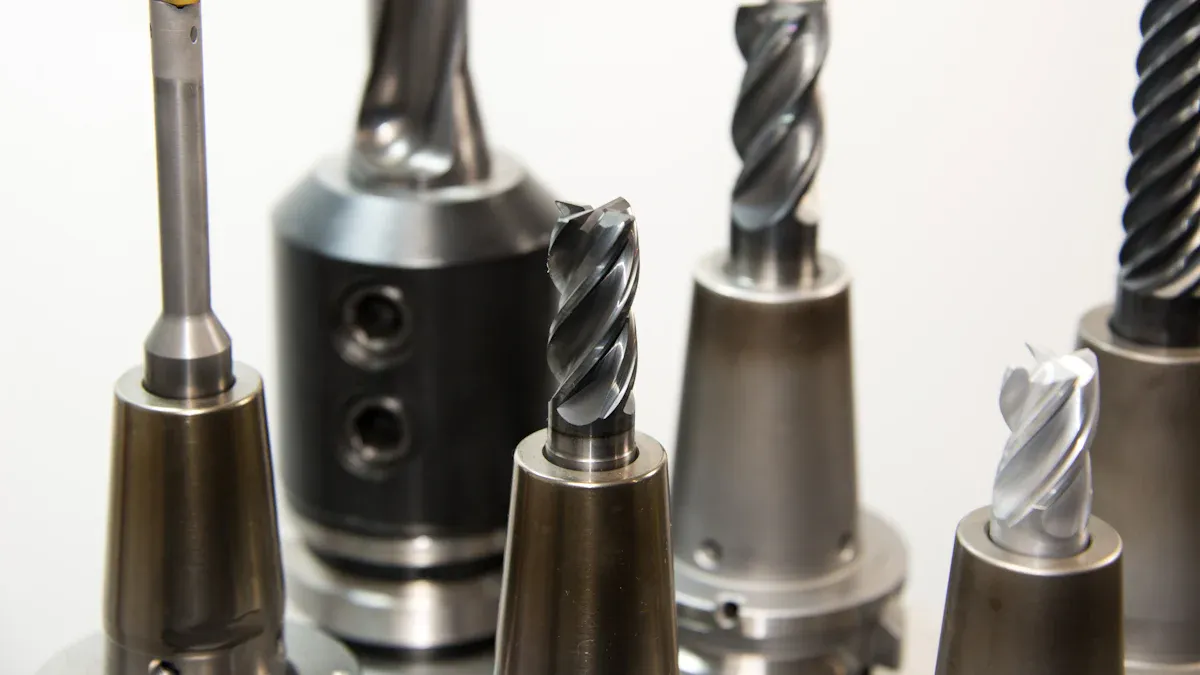
If you want good results when machining aluminum, you need to use tools made for it. Picking the right end mills for aluminum stops problems like broken tools, too many chips, and rough surfaces. You should check for things like the right number of flutes, sharp edges, and special coatings. For example, Hiboo’s cnc 3 Flutes DLC Coated Aluminum End Mills move chips out well and last longer. This helps you avoid many problems that machinists often have.
Common mistakes include:
Key Takeaways
Choose carbide end mills for aluminum machining. They last longer and cut faster, saving you time and money.
Select the right flute count. Use 2-flute end mills for rough cuts and quick material removal. Use 3-flute end mills for smoother finishes.
Pay attention to the helix angle. A high helix angle (35°-45°) helps move chips away quickly and reduces chatter.
Consider coatings like Diamond-Like Carbon (DLC). They lower friction, improve chip flow, and extend tool life.
Match the end mill size to your job. Larger diameters provide stability, while smaller ones allow for detailed cuts.
Choose the Right Material
Image Source: pexels
Carbide vs. HSS for Aluminum
When you start choosing the right end mill for aluminum, you need to look at the material of the tool. Most machinists use either carbide end mills or high-speed steel (HSS) end mills. Each type has its own strengths.
Carbide end mills last much longer than HSS tools. You will notice fewer replacements and less downtime.
Carbide end mills work best for high-performance jobs, especially in cnc machining.
HSS end mills offer good durability and strength. They can handle high-pressure tasks, but they wear out faster when you use them for cnc aluminum machining.
Carbide end mills cut faster and more efficiently. You get better results and save time.
If you want the best value for your shop, carbide end mills are a smart investment for cnc work.
Aluminum has a low melting point, so it can stick to your tools if you do not use the right end mill. Solid carbide end mills with two or three flutes help move chips away and keep the tool cool. This reduces heat and stops aluminum from building up on the cutting edge.
Durability and Performance
You want your tools to last and perform well. The table below shows how carbide and HSS end mills compare:
Feature | Carbide End Mills | HSS End Mills |
Hardness at High Temperatures | Maintains hardness, ideal for high-speed machining | Softens at lower temperatures |
Cutting Speed | Can cut at much higher speeds without losing edge | Wears out faster, needs frequent sharpening |
Tool Life | Generally lasts longer before replacement | Wears faster but is more forgiving |
Suitability | Best for high-speed machining applications | Better for softer materials like aluminum, brass, and wood |
When you focus on choosing the right end mill, you improve tool life and get better results. Carbide end mills give you precision, speed, and long-term savings. You can trust them for demanding cnc jobs and for working with aluminum alloys that expand quickly with heat.
Tip: Always check the properties of your aluminum alloy before choosing the right end mill. This helps you avoid problems like tool wear and chip welding.
Flute Count for End Mills for Aluminum
Image Source: pexels
2-Flute vs. 3-Flute Designs
Flute count is important when picking end mills for aluminum. Most machinists use 2-flute or 3-flute end mills for aluminum. These tools help move chips away and keep cuts neat. A 2-flute end mill has more space for chips to leave. This helps when you want to cut fast or remove lots of material. You also stop clogging, which happens with more flutes.
A 3-flute end mill gives more support and a smoother finish. The three cutting edges share the work. This means the tool twists less and stays strong. You can run your cnc machine faster and get a nicer surface. Hiboo’s CNC 3 Flutes DLC Coated Aluminum End Mills show how 3-flute designs work well. These end mills for aluminum mix chip space and strength. Many shops like them for this reason.
Tip: Use 2-flute end mills for rough cuts and quick material removal. Use 3-flute end mills for smoother finishes and more support.
Chip Evacuation Benefits
Flute count changes how well chips move away from the cutting area. Aluminum makes long, sticky chips that can block your tool. A 2-flute end mill clears chips fast. This keeps your cnc working well and stops heat from building up. You avoid rough edges and get a cleaner aluminum cut.
A 3-flute end mill gives good chip removal and a better finish. You get enough space for chips and more cutting edges for smooth parts. The bigger core of a 3-flute end mill helps stop bending. Your cuts stay straight and true. Pick a flute count that fits your job to cut aluminum with fewer problems.
Flute Count | Chip Evacuation Efficiency | Surface Finish Quality | Ideal Use |
2-Flute | Excellent | Good | Roughing/Semi-finishing |
3-Flute | Very Good | Excellent | Finishing/General Use |
4-Flute | Moderate | Excellent | High-Speed Finishing |
You get better results when you match flute count to your needs. For most aluminum jobs, 2-flute and 3-flute end mills for aluminum give the best mix of speed, chip control, and finish.
End Mill Geometry Matters
Helix Angle for Aluminum
The helix angle is very important. It is the angle of the cutting edge. This edge wraps around the tool. For aluminum, you need a high helix angle. Most experts say use 35° to 45°. A 45° helix angle gives a smooth finish. A 40° helix angle is good for rough and smooth cuts. High helix angles move chips away fast. This keeps your cnc machine working well. It also helps stop chatter.
A 35°-45° helix angle moves chips out fast.
A 45° helix angle makes the surface smooth.
A 40° helix angle works for rough cuts.
Many new carbide end mills have these features. Picking the right helix angle makes cnc work easier. You get better results.
Feature | Description |
Helix Angle | High helix angles (35-45 degrees) move chips out and stop chatter. |
Flute Design | Wide, shiny flutes help remove chips and lower friction. |
Material | Solid carbide is strong and lasts longer. |
Edge Sharpness and Corner Radius
Sharp edges and corner radius are important too. Sharp edges cut aluminum cleanly. They lower friction and help the tool last longer. You also get a better finish. A small corner radius makes the edge stronger. It stops chipping and helps the tool last. When you pick an end mill, look for sharp edges and a small corner radius.
Property | Impact on Tool Life | Impact on Surface Finish |
Edge Sharpness | Makes the tool last longer by lowering friction | Makes clean cuts and stops build-up |
Corner Radius | Makes the edge strong and stops chips | Makes the surface smoother and less rough |
Tip: Always check the shape of the end mill before you choose. The right geometry helps you cut aluminum faster and with fewer problems.
If you want your carbide end mill to work best, watch these features. They help you get smooth surfaces and make your tool last longer when you use your cnc for aluminum.
Coatings for Best End Mills for Aluminum
DLC and Other Coatings
You can boost your machining results by choosing the right coating for your end mills for aluminum. Diamond-Like Carbon (DLC) coatings stand out when you want the best end mills for aluminum. DLC coatings give you extreme hardness and very low friction. This means chips slide off easily, and you get a cleaner cut. Hiboo’s CNC 3 Flutes DLC Coated Aluminum End Mills show how a coated end mill can improve your work. You see less built-up edge, smoother surfaces, and longer tool life.
DLC coatings help you run your cnc machines faster. You also get more parts from each carbide end mill before you need a replacement. The table below shows how DLC coatings can improve your machining efficiency and tool life:
Benefit | Improvement Percentage |
Machining Efficiency | 30% |
Tool Life | 40% |
Other coatings, like TiAlN, work well for high heat. TiAlN resists heat up to 800°C, but DLC gives you better surface quality and chip flow for aluminum. DLC coatings work best at lower temperatures, which matches the needs of aluminum machining. The table below compares DLC and TiAlN coatings:
Coating | Heat Resistance | Cutting Efficiency | Surface Quality |
TiAlN | Excellent (up to 800°C) | High | Good |
DLC | Poor (degrades above 350°C) | Very High (low friction) | Excellent |
Tip: Use DLC-coated end mills for aluminum when you want less friction and longer tool life. You get better results and save money over time.
When to Use Uncoated Tools
You may wonder when to use uncoated tools. Uncoated end mills for aluminum work well for basic jobs or when you need a lower-cost option. They give you good results if you use the right speeds and feeds. For simple cnc tasks or soft aluminum alloys, uncoated tools can do the job. If you want the highest performance and longest tool life, choose a coated end mill like Hiboo’s DLC option.
Note: Always match your tool choice to your job. Coated end mills for aluminum give you the best results for high-speed cnc machining and tough production needs.
Chip Evacuation Strategies
Flute Design and Chip Flow
Flute design is very important when cutting aluminum. The right flute shape helps chips move away fast. This keeps your cnc machine working well. It also helps you get a smoother finish. End mills with two or three flutes have bigger spaces. These spaces let chips leave quickly. This is good when you need to remove lots of material. End mills with more flutes make the surface smoother.
The helix angle of the flute also matters a lot. A higher helix angle lifts chips out of the cut. This lowers heat and stops chips from sticking. Always pick the flute design that fits your job. Use fewer flutes for rough cuts. Use more flutes with a shiny surface for finishing.
Tip: Good chip removal stops chips from being cut again. It lowers heat and keeps your workpiece clean.
Preventing Clogging
Clogging happens often when you cut aluminum. Chips can stick to the tool and cause problems. You can stop this by using smart methods:
Use cutting oil or coolant to keep the tool cool.
Use a flood coolant system to wash chips away.
Keep tools sharp and change them when needed.
Pick end mills with special coatings to lower wear.
Clean your cnc machine and work area often.
Many shops use extra ways to help chip removal. The table below shows how each method works:
Chip Evacuation Strategy | Effectiveness Description |
High-Pressure Coolant | Cuts chip recutting by 40%, tool life goes up by 12% |
Air Blast Systems | Lowers surface defects by 30% |
Minimum Quantity Lubrication | Moves chips better by 15%, coolant costs drop by half |
High-Helix End Mills | Stops chip clogging by 20% |
Polished Flutes and Coatings | Lowers chip buildup by 18%, tool life goes up by 10% |
Variable Flute Designs | Drops chip problems by 15% |
Peck Milling | Cuts chip buildup by 25%, makes cuts more accurate |
When you use these methods, chips move away faster. You avoid costly machine stops. Good chip removal means your tools last longer. You also get better results every time you cut aluminum.
Choose an End Mill Size
Diameter Selection
When picking an end mill for aluminum, think about its diameter. The diameter changes how fast you can cut. It also affects how exact your work will be. A bigger diameter makes the tool more stable. This helps stop the tool from breaking. You can control the cutting better with a larger diameter. A smaller diameter lets you reach tight spots. It helps you make detailed cuts. The best diameter depends on your cnc machine and the part you want to make.
Here is a table with key things to think about:
Factor | Impact on Machining |
Core Diameter | Makes the tool stable and stops it from breaking |
Flute Count | Helps control chips and makes cutting better |
Tool Coating | Makes the tool last longer and lowers friction |
Tool Length | Changes how stiff the tool is and how far it reaches |
Tool Diameter | Decides how fast you cut and how exact you are |
Pick a bigger core diameter if you want more stability. Good flute design and smooth coating help you cut aluminum better. The diameter and length of the tool matter for how stiff and fast it is.
Tip: Always match the end mill diameter to your cnc job. This helps you get good results and stops tool breakage.
Length and Rigidity
The length of your end mill is important. Long end mills can reach deep spots. But they might bend or shake when cutting. This can make your finish rough and less exact. Short end mills are stiffer. They stay straight and make smoother cuts. If you need to reach deep, use a long end mill. Go slow and watch for shaking.
A bigger shank diameter makes the tool stronger. You get less bending and better cutting, especially at high speeds. The end mill’s design helps too. For example, single flute or square end mills move chips out fast. They keep the tool cool. This makes the tool last longer and keeps cuts neat.
Long end mills reach deep but may bend and shake.
Short end mills are stiff and cut more exactly.
A bigger shank diameter makes the tool stronger.
Good end mill design helps move chips and lowers heat.
Note: Always balance reach and stiffness when you pick an end mill. This keeps your cnc work exact and helps your tools last longer.
Balancing Cost and Performance
Tool Life vs. Price
When picking end mills for aluminum, think about price and tool life. Cheap tools might look like a good deal at first. But they can cause problems later. Many people find that low-cost end mills wear out fast. They also make rough surfaces. You will spend more time changing tools and fixing mistakes. Sometimes, cheap end mills do not cut the right size. This can ruin your parts and waste money.
Cheap end mills often make rough cuts and do not last long.
Some people lose money because bad tools waste material.
Spending more on good end mills gives better results.
You save time and money if your tools last longer.
If you want your cnc work to go well, pick end mills that balance cost and quality. This helps you avoid hidden costs and get better work.
Value for Production Needs
If you make lots of parts, do not just look at price. Think about the material, the finish you want, and what your machine can do. The table below shows how these things change your choice:
Key Factor Consideration | If Condition Points Towards… | Lean Towards… | Notes |
Material Abrasiveness | High (Si >12%, MMC, CFRP/GFRP) | PCD | Essential for tool life |
Material Softness + Finish Need | Soft/Pure + Mirror Finish (Ra < 25nm) | MCD | If operation/machine suitable |
Milling Operation Type | Interrupted / Roughing / General | PCD | Requires toughness |
Milling Operation Type | Continuous Finishing (Ultra-Precision) | MCD | If material/machine suitable |
Machine Tool Capability | Standard Good cnc | PCD | More forgiving |
Machine Tool Capability | Ultra-Precision Machine Required | MCD | Mandatory for MCD success |
Primary Economic Driver | Tool Life / Cost Per Part (Volume) | PCD | Usually lower total cost in wear apps. |
Primary Economic Driver | Unique Finish / Enabling Technology | MCD | Justified by capability, not just tool life |
Pick end mills that fit your job and shop needs. If you make many parts, use tools that last and keep costs low. For special finishes or very exact work, you may need better tools. Always think about what matters most for your shop.
Tip: Think about your goals before you buy. The right end mill saves money, makes better parts, and keeps your cnc working well.
You can make aluminum machining better by using these seven tips. Picking the right end mill gives you nicer results and saves money. Hiboo’s CNC 3 Flutes DLC Coated Aluminum End Mills are a good example. Three flutes and DLC coating help chips move out and make the tool last longer. You get smoother surfaces and stronger tools when you use better end mills.
Improvement Type | Description |
Increased tool strength | The rounded corner spreads out stress, so the tool does not chip or break easily. |
Improved surface finish | The cutting edges touch the material slowly, so surfaces look smoother, even on curved parts. |
Enhanced chip control | The rounded corner breaks chips better, so chips leave the area faster. |
Check your tools and see if you can upgrade them. Experts say to use special tools, control heat, and test your cnc setup for the best results. Keeping up with maintenance and making smart choices helps your shop work well.
FAQ
What is the best flute count for aluminum machining?
You get the best results with 2-flute or 3-flute end mills. These designs help chips move out fast. You see smoother finishes and less clogging.
Why should I choose carbide end mills over HSS for aluminum?
Carbide end mills last longer and cut faster. You save time and money. HSS works for simple jobs, but carbide gives better performance for CNC machining.
How does DLC coating help when machining aluminum?
DLC coating lowers friction and stops aluminum from sticking. You get longer tool life and cleaner cuts. Hiboo’s DLC-coated end mills show these benefits.
What size end mill should I use for aluminum parts?
Pick a size that matches your part and machine. Large diameters give more strength. Small diameters help you reach tight spots. Always check your CNC setup.
How can I prevent chip clogging during aluminum machining?
Use coolant or air blast to clear chips.
Choose end mills with polished flutes.
Keep your tools sharp for better chip flow.
 English
 العربية
 Français
 Русский
 Español
 Português
 Deutsch
 italiano
 日本語
日本語 한국어
한국어 Nederlands
 Tiếng Việt
 ไทย
ไทย Polski
 Türkçe
 ພາສາລາວ
 ភាសាខ្មែរ
 Bahasa Melayu
 ဗမာစာ
ဗမာစာ Filipino
 Bahasa Indonesia
 magyar
 Română
 Čeština
 Монгол
 қазақ
қазақ Српски
 हिन्दी
 فارسی
فارسی Slovenčina
 Slovenščina
 Norsk
Norsk Svenska
 українська
 Ελληνικά
 Suomi
Suomi Հայերեն
 עברית
עברית Latine
 Dansk
Dansk বাংলা
বাংলা Hrvatski
 Gaeilge
 Oʻzbekcha
 latviešu
 Беларуская мова
 Български
 Lietuvių
 Gaelo Albannach
 ئۇيغۇرچە
 Cymraeg