The 1/4-20 thread is one of the most widely used thread specifications in the Unified Thread Standard (UTS), commonly found in industrial manufacturing, mechanical assembly, home improvement, and DIY projects. The "1/4" indicates a nominal diameter of 1/4 inch, while "20" means 20 threads per inch, classifying it as a UNC (Unified National Coarse) thread.
Choosing the correct drill bit size is essential for successful thread tapping:
Thread Strength: An oversized hole reduces thread engagement and weakens the connection; an undersized hole increases tapping difficulty and can cause tap breakage.
Processing Efficiency: Proper drill bit size extends tap life and minimizes machining issues.
Theoretical Drill Size: Approximately 0.201 inches (5.10 mm) – Close to the thread's minor diameter.
The Golden Ratio: Thread Engagement
For most applications, 75% thread engagement is considered the ideal balance, providing sufficient connection strength without excessive tapping resistance. This means 75% of the thread depth contacts the hole wall.
Standard Selection: Recommended Drill Bit Sizes for 1/4-20 Taps
Primary Choice: #7 Drill Bit
Diameter: 0.2010 inches (5.105 mm)
Advantage: Provides approximately 75% thread engagement, suitable for most materials and scenarios.
Application: General-purpose machining of steel, aluminum, brass, and other common metals.
This is the most frequently recommended size in machining handbooks and by tap manufacturers, ensuring the best balance between thread strength and tapping ease.
Common Alternative Sizes and Applications
Drill Bit Specification
Diameter (Inches)
Diameter (mm)
Thread Engagement
Best Use Case
#7
0.2010
5.105
75%
Standard choice, universal for most materials
13/64"
0.2031
5.159
70%
Lower tapping resistance, ideal for hand tapping or hard materials
#8
0.1990
5.055
80%
High thread strength requirements, e.g., stainless steel, high-strength alloys
#6
0.2040
5.182
70%
Soft materials (plastics, soft aluminum), prevents material deformation
1/4-28 UNF: Fine thread, requires a #3 drill bit (0.2130 inches).
Always check if the tap is marked "UNC" or "UNF" before use.
Four Key Factors Influencing Drill Bit Selection
1. Material Properties
Hard Materials (stainless steel, tool steel): Consider #8 drill bit for higher engagement, or 13/64" with ample lubrication.
Soft Materials (aluminum, copper, plastics): Consider #6 or 13/64" to prevent thread deformation from material compression.
Brittle Materials (cast iron, certain plastics): Standard #7 drill bit is usually appropriate.
2. Hole Type
Through-Hole: Select standard size, ensuring uniform thread along full length.
Blind Hole: Account for chip clearance; drill depth should be thread depth plus approximately 1/4 of the diameter.
3. Application Requirements
High-Strength Connections: Choose #8 drill bit for higher thread engagement.
Frequent Disassembly: Consider 13/64" to reduce thread wear.
Sealing Requirements: Slightly larger hole may be needed when using thread sealant.
4. Machining Method
Hand Tapping: Recommended 13/64" drill bit to reduce operator effort.
Machine Tapping: Use standard #7 with cutting fluid.
Spiral Point/Flute Taps: Better chip evacuation allows slightly more flexibility in size selection.
Practical Guide: 4 Steps to Determine the Best Drill Bit Size
Step 1: Analyze the Application
Identify the workpiece material, hole type (through/blind), thread load requirements, and available equipment.
Step 2: Initial Drill Bit Selection
Most situations: Start with #7 drill bit.
Hard materials or stainless steel: Consider #8.
Hand tapping or soft materials: Consider 13/64".
Step 3: Test and Verify
Perform test drilling and tapping on scrap material or inconspicuous area. Check:
Thread form completeness
Moderate tap resistance
Proper fit with mating fastener
Step 4: Fine-Tune and Optimize
Fit too tight: Try one size larger drill bit.
Insufficient thread strength: Try one size smaller drill bit.
Frequent tap breakage: Recheck material hardness, consider more appropriate drill size and lubrication.
Common Problems and Solutions
Problem 1: Tap Seizure or Breakage
Possible Causes: Drill bit too small, insufficient lubrication, material too hard.
Solutions: Switch to 13/64" drill bit, use dedicated tapping fluid, reduce tapping speed.
Problem 2: Stripped Threads or Loose Connection
Possible Causes: Drill bit too large, material too soft, non-perpendicular tapping.
Solutions: Switch to #8 drill bit, use thread-locking adhesive, ensure perpendicular tapping.
Problem 3: No Imperial Drill Bits Available
Solution: Use closest metric equivalent (5.1 mm ≈ #7, 5.2 mm ≈ 13/64"), preferring the slightly smaller option.
Safety Precautions and Tool Preparation
Essential Tools
Accurate measuring tools (calipers or micrometer)
Appropriate tap wrench or holder
Cutting fluid or lubricant (for metalworking)
Safety glasses
Safety Rules
Always wear safety glasses.
Securely clamp the workpiece.
Maintain tap perpendicularity during tapping.
For blind holes, periodically reverse tap to clear chips.
Avoid excessive force to prevent tap breakage.
Summary: Core Selection Principles
General Guidelines
Standard Choice: For most situations, #7 drill bit is optimal.
Hard Materials: Consider #8 drill bit for increased thread strength.
Soft Materials/Manual Operation: Consider 13/64" drill bit to reduce resistance.
Quick Reference Chart
Mild steel/Aluminum alloys: #7 drill bit
Stainless steel/High-strength alloys: #8 drill bit
Plastics/Soft metals/Hand tapping: 13/64" drill bit
Emergency metric alternative: 5.1 mm drill bit (closest to #7)
Final Recommendation
When selecting drill bit size, remember: "Standard as baseline, adjust according to need." When uncertain, start with #7 drill bit and fine-tune based on actual results. For critical applications, always test on scrap material and document optimal sizes for different materials and conditions to build your personal machining database.
Choosing the correct drill bit size not only improves machining efficiency and quality but also extends tool life and prevents unnecessary material waste and safety hazards. With these principles, you can confidently select the most appropriate drill bit size for any 1/4-20 tapping task.
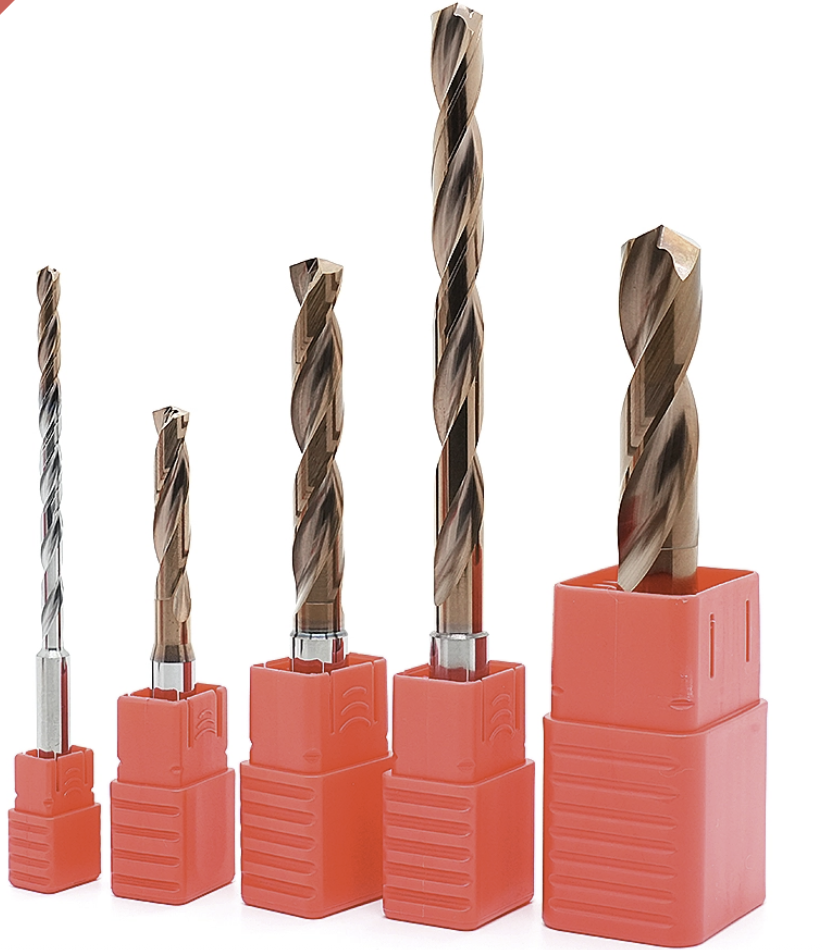
As a leading drill bit manufacturer, Hiboo Tools delivers precision-engineered cutting tools including Straight Shank Tungsten Steel Drills, Internal Coolant Drills, and Spot Drill Bits. Designed for durability and performance, our drill bits excel in processing hardened materials (up to HRC65), stainless steel, alloys, and composites, ensuring superior accuracy and efficiency in drilling operations.
Explore Hiboo Tools' range of high-precision bits for a variety of materials and applications, get expert selection advice, or simply order the Tools you need to meet your most demanding machining needs.
 English
 العربية
 Français
 Русский
 Español
 Português
 Deutsch
 italiano
 日本語
日本語 한국어
한국어 Nederlands
 Tiếng Việt
 ไทย
ไทย Polski
 Türkçe
 ພາສາລາວ
 ភាសាខ្មែរ
 Bahasa Melayu
 ဗမာစာ
ဗမာစာ Filipino
 Bahasa Indonesia
 magyar
 Română
 Čeština
 Монгол
 қазақ
қазақ Српски
 हिन्दी
 فارسی
فارسی Slovenčina
 Slovenščina
 Norsk
Norsk Svenska
 українська
 Ελληνικά
 Suomi
Suomi Հայերեն
 עברית
עברית Latine
 Dansk
Dansk বাংলা
বাংলা Hrvatski
 Gaeilge
 Oʻzbekcha
 latviešu
 Беларуская мова
 Български
 Lietuvių
 Gaelo Albannach
 ئۇيغۇرچە
 Cymraeg