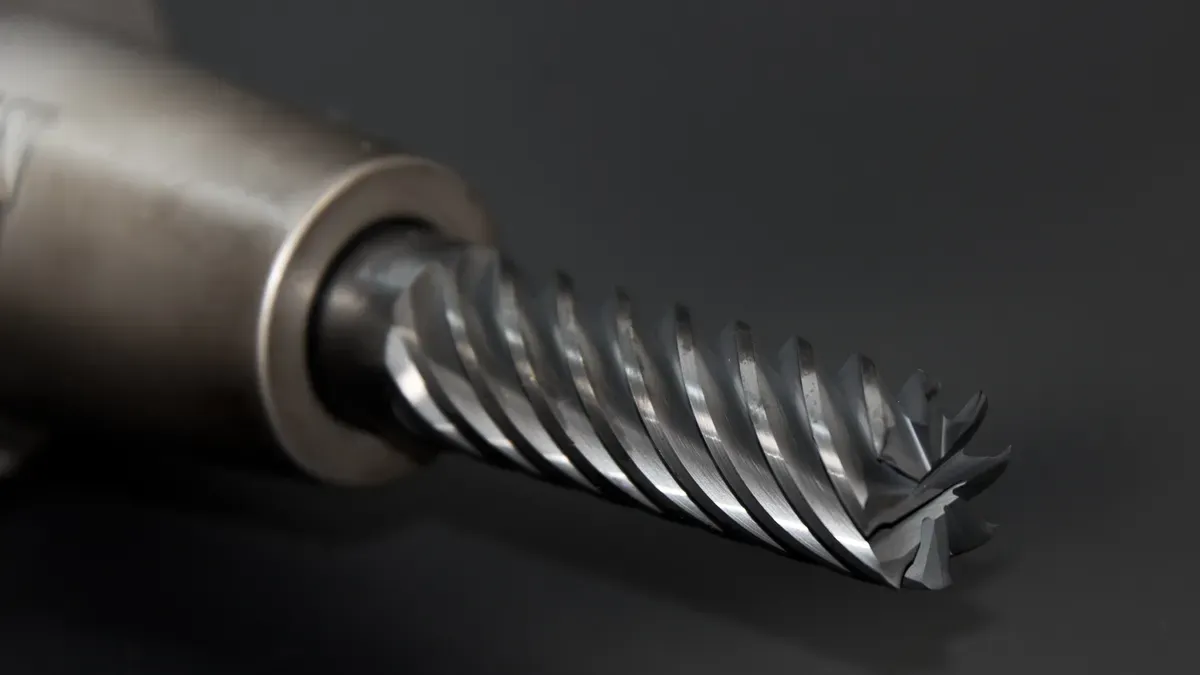
When you pick a solid carbide end mill for stainless steel, you should think about the material, end mill design, and coating. Cutting stainless steel is hard. You might see work hardening. This makes cutting tougher and wears out tools faster. Stainless steel is very strong. This can make tools wear out quickly and even bend. Heat builds up fast because stainless steel does not move heat away well. This can break your tool. Chromium and nickel in the steel can make the cutting edge dull faster. Hiboo Tool sells good end mill cutters that help with these problems. You can trust their strong materials and expert help to choose better tools.
Key Takeaways
Pick solid carbide end mills made with good materials. This helps them work better and last longer. - Choose the right carbide grade for your cutting job. Grades like M10 and M20 cut fast. Grades like M30 and M35 are good for hard jobs. - Use special coatings like TiAlN or nano coatings. These help the tool handle heat and last longer when cutting stainless steel. - Look at flute count and shape. Using 4 to 6 flutes helps remove chips and makes the surface smooth. - Always check cutting settings and coolant flow. This stops the tool from getting too hot and keeps it working well.
Solid Carbide End Mill Material
When you pick a solid carbide end mill for stainless steel, look at the material first. Hiboo Tool uses special carbide materials in every tool. The company has been making tools for over 20 years. They use new technology and check quality very carefully. This means you get tools that are made well and work great.
Tip: Always check what your end mill is made of before you start. Good materials help you do better work and save money over time.
Here is a table that shows why Hiboo Tool’s carbide materials are special:
Property
Description
Premium Raw Materials
Uses imported ultra-fine grain carbide with a uniform inside and steady hardness.
Advanced Equipment
Uses top CNC grinding machines for very accurate cutting.
Diversified Coatings
Has special coatings for different jobs, making tool life over 30% longer than normal.
Strict Quality Control
Checks every tool before sending it out, so you get no bad tools.
Carbide Grade Selection
You need to pick the right carbide grade for your job. The grade changes how well your solid carbide end mill works and how long it lasts. Carbide tools are the best choice for stainless steel because they are hard and last longer. Coated carbide tools, like ones with TiAlN or AlCrN, work even better. These coatings help the tool stay cool and cut smoother.
Here is a table to help you see which carbide grades are good for different jobs:
Grade
Application
Characteristics
M10
High-speed cutting, surface finishing
Good for cutting all the time
M20
General machining, light interrupted cutting
Good mix of toughness and wear resistance
M25
General machining, light interrupted cutting
Works in many cutting jobs
M30
Low-speed machining, heavy depth of cut
Best for rough and tough jobs
M35
Low-speed machining, heavy depth of cut
Extra strong for hard materials
If you cut very hard materials, pick a grade that fits your job. For example, M10 and M20 are good for fast and normal cutting. M30 and M35 are better for rough and heavy work.
High Hardness End Mill Benefits
A high hardness end mill gives you many good things when you cut stainless steel or other hard materials. The tool lasts longer and keeps its shape, even when things get tough. Here are some reasons to use a high hardness end mill:
A high hardness end mill is very hard. It can cut hard materials with less damage.
The tool does not wear out fast, so you do not change it often. This saves you time and money.
High hardness end mills are very strong. This helps you get smooth cuts and keeps the tool straight.
The tool can take high heat. This is important when you cut stainless steel, which gets hot quickly.
You get steady results, even when you cut hard materials for a long time.
When you use a high hardness end mill from Hiboo Tool, you can trust it will work well with stainless steel and other hard materials. The solid carbide end mill is special because it is very hard, does not wear out fast, and has advanced coatings. This makes it the best tool for your hardest jobs.
When you choose a solid carbide end mill for stainless steel, you need to look at the flute count and geometry. Flutes are the grooves that run along the endmill. They help move chips away from the cutting area. If you use more flutes, you can get a smoother surface and faster feed rates. However, too many flutes can make it hard for chips to escape, which can cause overheating. Fewer flutes make chip removal easier, but you may need to slow down your feed rate. The right flute geometry is important for high-hardness materials like stainless steel. Hiboo Tool uses spiral flutes in their design to help with chip evacuation and keep your work area clean. This design helps you get better cutting performance and longer tool life.
Cutting Edge and Helix Angle
The cutting edge and helix angle are key parts of end mill design. A sharp cutting edge lets you cut through harder materials with less force. The helix angle is the twist of the flutes. A higher helix angle helps chips move away faster and gives you a better finish. But, if the angle is too high, the endmill might bend more easily. For high-hardness end mill tools, you want a balance. This balance gives you strong cutting edges and keeps the tool steady. You get stable cutting performance and longer tool life, even when you work with high-hardness materials.
Choosing the right helix angle helps you avoid tool wear.
A good cutting edge design lets you cut stainless steel smoothly.
High-hardness end mill tools work best with the right helix angle.
High Quality End Mill Cutter Features
A high quality end mill cutter stands out because of its special features. Hiboo Tool adds corner radius designs to make the cutting edge stronger. This helps you cut high-hardness materials without chipping the tool. The solid carbide end mill from Hiboo Tool has high resistance to heat and plastic deformation. You can use it for high-speed machining and get great results. The design also includes advanced coatings and precise geometry. These features help you cut harder materials and keep your endmill working longer.
Tip: Always pick a high quality end mill cutter with strong cutting edges and advanced design. This will help you get the best results when working with high-hardness materials.
When you cut stainless steel, you need the right coating. The coating keeps your tool safe from heat and wear. It also helps you get a smoother finish on your workpiece. Hiboo Tool has advanced nano coatings. These coatings help you when cutting tough materials like stainless steel.
TiAlN and Nano Coatings
You can pick from different coatings for your end mill. Each coating has its own benefits. Here is a table to show the most popular choices:
Coating
Best Application
Key Advantages
TiAlN
Roughing stainless steel
Superior heat resistance, reduced friction, increased hardness
TiAlN is a popular coating for stainless steel. It gives your tool good heat resistance and helps it last longer. Nano coatings from Hiboo Tool make your tool even better. Studies show nano coatings can help your tool last up to 2.5 times longer when cutting austenitic stainless steel. Nano coatings also make your surface smoother and keep your tool steady while cutting.
Tool Life and Heat Resistance
You want your end mill to last a long time. Coatings are important for this. They help your tool handle high heat and stop it from wearing out. For example, nACo3 (AlTiSiN) nano coating is special. It gives your tool better life and surface quality, especially when cutting 316L stainless steel. This coating keeps your tool sharp and steady, even in tough jobs.
Here are some ways coatings help your tool:
Coatings give your tool thermal resistance. Your tool can handle more heat without breaking.
The smooth surface from coatings lowers friction. Less friction means less heat and a better finish.
Coatings make your tool harder. This stops wear and helps your tool cut longer.
Tip: If you want the best results when cutting stainless steel, choose a solid carbide end mill with advanced nano coatings from Hiboo Tool. You will see less tool wear, smoother finishes, and longer tool life.
Practical Tips for Maximizing Tool Life
Cutting Parameters and Coolant
You can make your tool last longer by using the right settings. Set the cutting speed and depth of cut carefully. Stainless steel gets hot very fast. You need to control heat when you cut it. Use a spindle speed that is about 30% less than what you use for carbon steel. This helps stop your tool from getting too hot. Feed per tooth should be between 0.05 and 0.10 mm. Keep the depth of cut at or below one-third of the tool’s diameter. This keeps your tool from breaking and gives you a smooth finish.
Parameter
Recommendation
Spindle Speed
~30% lower than carbon steel machining
Feed per Tooth
0.05 – 0.10 mm/tooth
Depth of Cut
≤ 1/3 of tool diameter
Coolant is very important when you cut stainless steel. It helps take away heat and moves chips away from the tool. Flood cooling keeps the temperature steady and helps you get a nice finish. Mist cooling uses less coolant and works well for fast jobs. Cryogenic cooling makes your tool last longer and does not leave anything behind. Always make sure the coolant hits the cutting edge.
When you cut stainless steel, it gets very hot and strong forces happen. Good cooling keeps your tool from wearing out and helps you get a better finish.
Common Mistakes to Avoid
You can stop problems if you watch out for these mistakes:
Cutting too slow or too shallow. If you go too slow or do not cut deep enough, the tool rubs instead of cutting. This makes the steel harder to cut next time.
Picking the wrong tool coating. Regular coatings wear out fast. Use coatings that can handle heat for stainless steel.
Not checking coolant flow and pressure. If the coolant is weak, it will not cool or move chips well.
Forgetting to change tools on time. Changing tools when you should keeps your parts looking good.
Not making sure your work is held tight. If your setup is loose, the tool can chatter and the finish will look bad.
Hiboo Tool can help you with advice and special solutions. You can get help picking tools, setting cutting speeds, and even get custom tools if you need them.
Service Type
Description
Technical Support
Experts give you advice and help with tool choices and cutting problems.
Custom Solutions
You can get tools made just for you, with special sizes, coatings, or packaging.
You can talk to Hiboo Tool’s experts to learn how to make your tool last longer and get a better finish.
When picking a solid carbide end mill for stainless steel, you should pay attention to three things. These are material, design, and coating. High-performance carbide with 4-6 flutes works well. Advanced coatings like TiAlN or AlTiN help the tool last longer. The shape and coating of each tool change how it cuts and how long it works. Hiboo Tool sells good products and gives expert advice. Look at this table to help you pick:
Criteria
What to Look For
Material and Coating
Ultrafine carbide, heat-resistant coating
Geometry and Flute
4-6+ flutes, optimized shape
Application Suitability
Match tool to your job
Pick the right tool to get the best results.
FAQ
What flute count works best for stainless steel?
You should use 4 to 6 flutes for stainless steel. This range gives you good chip removal and a smooth finish. More flutes can help with surface quality, but fewer flutes clear chips better.
How do I know if my end mill needs replacing?
Watch for dull edges, poor surface finish, or loud noises during cutting. If you see blue chips or feel more vibration, change your tool. These signs mean your end mill is wearing out.
Do I need coolant when machining stainless steel?
Yes, you need coolant. Coolant keeps your tool cool and helps remove chips. It also improves tool life and surface finish. Always direct the coolant at the cutting edge for best results.
What coating should I choose for stainless steel?
Pick TiAlN or nano coatings. These coatings resist heat and wear. They help your tool last longer and cut smoother. Hiboo Tool offers advanced coatings for stainless steel applications.
 English
 العربية
 Français
 Русский
 Español
 Português
 Deutsch
 italiano
 日本語
日本語 한국어
한국어 Nederlands
 Tiếng Việt
 ไทย
ไทย Polski
 Türkçe
 ພາສາລາວ
 ភាសាខ្មែរ
 Bahasa Melayu
 ဗမာစာ
ဗမာစာ Filipino
 Bahasa Indonesia
 magyar
 Română
 Čeština
 Монгол
 қазақ
қазақ Српски
 हिन्दी
 فارسی
فارسی Slovenčina
 Slovenščina
 Norsk
Norsk Svenska
 українська
 Ελληνικά
 Suomi
Suomi Հայերեն
 עברית
עברית Latine
 Dansk
Dansk বাংলা
বাংলা Hrvatski
 Gaeilge
 Oʻzbekcha
 latviešu
 Беларуская мова
 Български
 Lietuvių
 Gaelo Albannach
 ئۇيغۇرچە
 Cymraeg