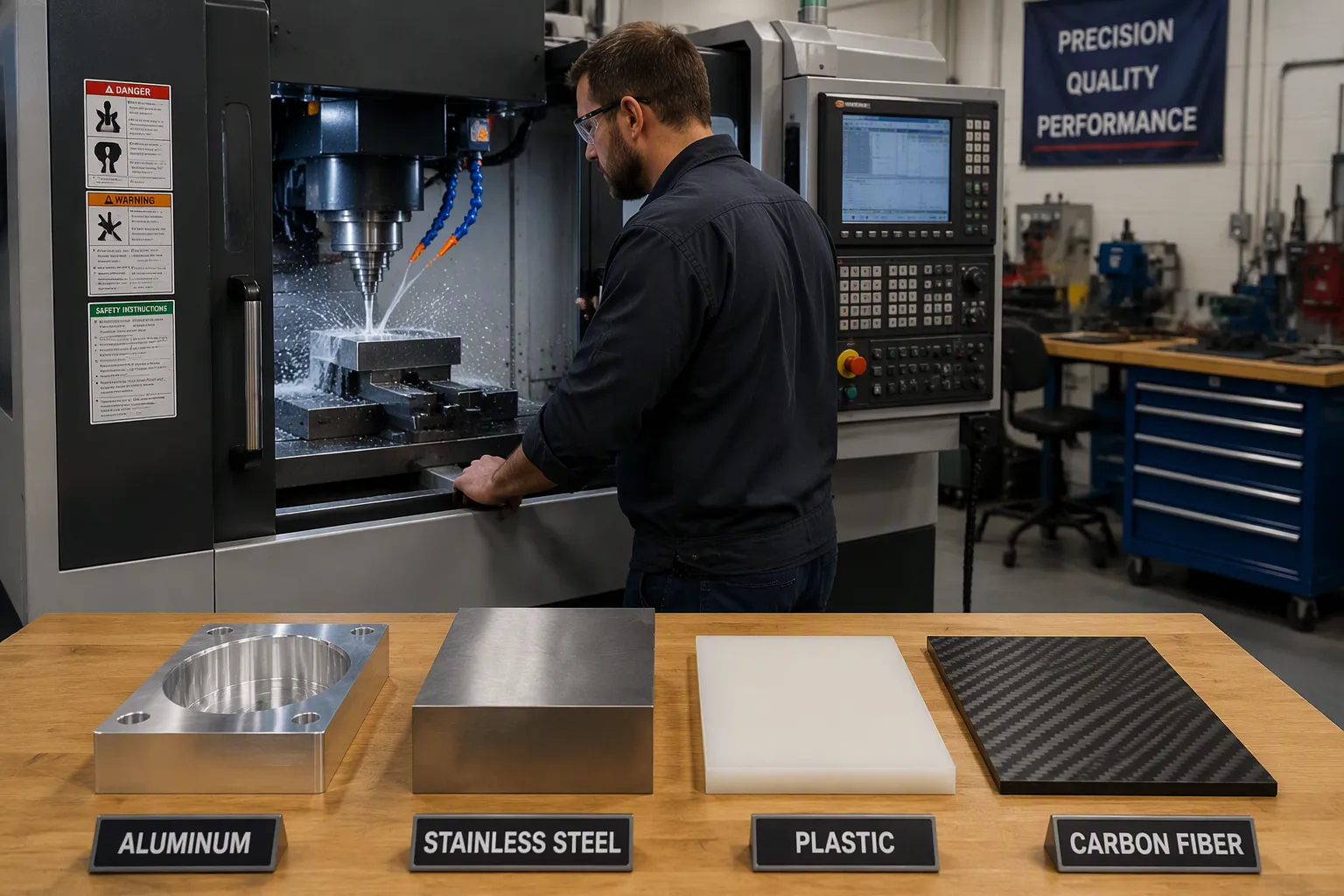
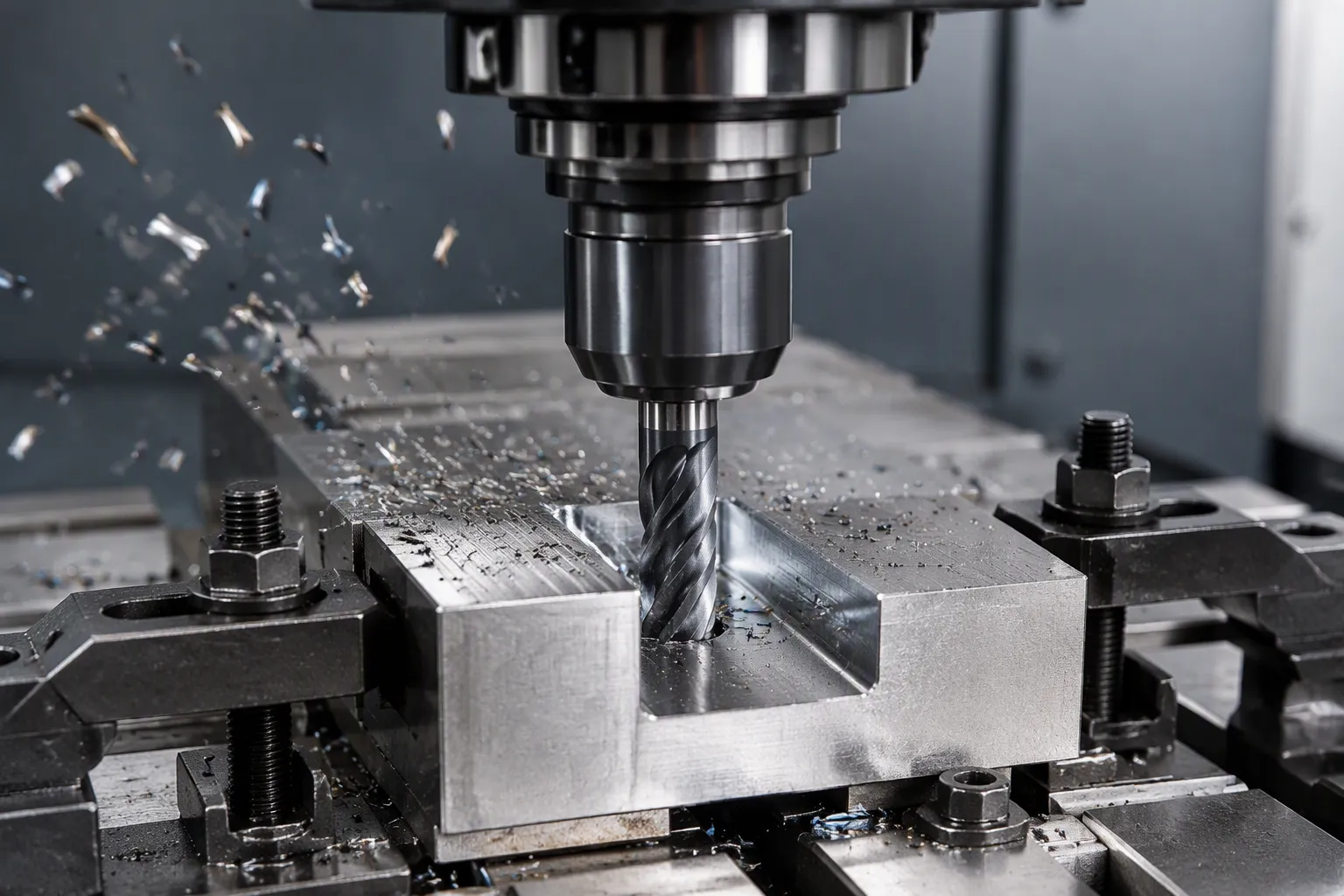
Carbide end mills are spinning cutting tools used on CNC and manual milling machines. They shape, slot, profile, and finish a workpiece with high precision and efficiency. These tools remove material from a workpiece to reach the wanted size or shape.
The main answer comes first: carbide end mills cut metals, plastics, wood, and composites. Aerospace, automotive, medical, and general machine shops use them every day. Carbide keeps a sharp edge through long milling runs, so cutting stays fast and repeatable. Operators also depend on these tools for slotting, facing, and profiling jobs. Different types fit different jobs, and matching the tool to the task pays off.
Key Takeaways
Carbide end mills cut metals, plastics, wood, and composites with great accuracy and speed.
These tools last 10 to 20 times longer than high-speed steel tools. That saves you time and money.
Pick the end mill type and coating that fit the material to get the best results.
Use carbide end mills for profiling, slotting, facing, and contouring on CNC and manual machines.
Pick the right tool grade and budget so your cutting stays steady and efficient.
What Are Carbide End Mills Used For?
Definition and Composition
Carbide end mills are powerful rotary cutting tools. CNC machining centers and manual milling machines both grip them in a spindle. The spindle spins the tool against the part at a set speed and feed. The tool turns and takes material off a workpiece. Shops pick these cutters for fast, repeatable milling, and they choose among several types for different jobs.
Solid carbide end mills begin as tungsten carbide powder. Manufacturers mix those grains with a cobalt binder, usually 6% to 15% cobalt. Small amounts of grain growth inhibitors, such as vanadium and chromium additions, keep the grains fine during sintering. The result is a micrograin structure with particles below 1 μm. This structure gives very high hardness and a transverse rupture strength of about 500 ksi or more. Hiboo Tools makes its solid carbide tools from micrograin material and adds a Black Nano coating for wear protection. The coating lowers friction and adds heat resistance at the cutting edge. Fine grains also resist chipping at the edge.
Why Carbide Cuts Differently
The material holds hardness at high heat. High-speed steel keeps hardness to about 1,100°F, while the tool maintains hardness to roughly 1,400°F. That heat resistance lets a milling cutter run at higher speeds without softening. It also reaches Rc 89-93 on the HRA scale, far above the Rc 63-65 of high-speed steel. Higher spindle speeds shorten cycle time and raise throughput. A rigid setup and the right feed rate keep that advantage.
Wear resistance explains the rest. Its cutting edges last 10 to 20 times longer than high-speed steel edges in many jobs. The material also cuts parts hardened to Rc 65 and above. Solid carbide grades therefore hold precision over long cutting runs and protect the surface finish. Long tool life also cuts downtime for tool changes. Shops that track tool wear get the most from each cutter. These traits make carbide the default choice for demanding machining work.
Materials and Industries They Serve
Metals, Plastics, and Composites
Carbide end mills work on many different materials. Steel, stainless steel, titanium, aluminum, cast iron, and hardened alloys are all within their range. Softer materials like plastics, wood, and composites also cut well when you use the right shape and coating. Aluminum cuts best with sharp flutes and smooth surfaces, because soft metal sticks to edges when it gets hot. Hardened alloys need grades that resist heat and keep a sharp edge under pressure.
Composites create their own problems, and tool design solves each one. The table below shows common problems and practical fixes.
Challenge
How It Is Addressed
Delamination of composite layers
Straight flute end mills push cutting forces outward; compression cutters use opposing up/down helices to keep layers together
Uncut fibers
High positive rake geometry shears fibers; diamond-cut tools with alternating left/right teeth cut through fibers
Fiber tear-out
Compression cutters keep material removal steady; composite finishers use a slow helix and high flute count
Uneven tool wear from abrasive glass or carbon fiber
Amorphous diamond coating improves lubricity; CVD diamond works for high fiber-fill cases; PCD tooling lasts the longest
Poor surface finish from mixed materials
Composite finishers with slow helix and high flute count add contact points for smoothness
Stringy chip nesting around the cutter
Chipbreaker geometry shortens chips and helps them clear out
Key Industries and Typical Jobs
Aerospace shops mill titanium structural parts, where strength-to-weight ratio and corrosion resistance matter. Ultra-fine-grain solid carbide in flat, ball nose, and corner radius forms handles side milling, curved surfaces, and reinforced corners. AlTiN and TiAlN coatings work for general titanium jobs, and improved geometry keeps chips moving and the cut steady.
Automotive plants do high-volume aluminum machining for engine and transmission housings. Fast spindle speeds and clean chip removal keep cycle times short. Medical device makers cut titanium, stainless steel, and cobalt-chromium alloys, plus polymers such as UHMPE. They keep runout near 0.01 mm on small tools and aim for surface finish of 15–18 µin in critical bearing areas. Solid carbide form-ground tools work well for these complex parts and hard materials.
Tool tolerance and finished-part tolerance are related but are not the same. Final part accuracy also depends on runout, tool deflection, machine condition, toolpath, cutting allowance, temperature, and inspection method.
Mold and die shops cut hardened steels and heat-treated alloys, where fine grains and coatings protect edge sharpness. General manufacturing covers everyday profiling, slotting, and facing on CNC and manual machines. In all these settings, the right tool grade and coating decide how long the edge lasts and how clean the cut looks. Matching tool types to the material and the job is still the surest path to reliable results in industrial milling applications.
Milling Operations They Handle
Profiling, Slotting, and Facing
Carbide square end mills do most of the everyday work in milling jobs. Their flat tip and 90-degree corner angle make clean, flat-bottomed slots, pockets, and shoulders. Cutting loads spread evenly across the full tip width, so these tools can take heavier, more aggressive passes. Hiboo Tools' HRC55° Square End Mills and HRC60° Square End Mills fit this role well. Shops use them for profiling, slotting, facing, and shoulder milling on steel, stainless, and hardened alloys.
The table below shows where each geometry fits best.
Ramp and helical entry belong in the same toolkit. Circular ramping uses all three axes and spreads cutting forces, which gives the longest tool life. A shop can figure feeds for a slotting cut first, then use an interpolation calculator to find the ramp angle and adjusted feedrate. For a 2" hole, one worked example gives a 6.1° ramp angle and 31 IPM, slower than the 43 IPM straight-slot feed. Ramp angles of 1°–3° work for hard ferrous materials, while 3°–10° work for soft and non-ferrous work. A strong tool core and room for chip removal matter here. Operators should always adjust feeds and speeds for the ramped cut instead of using normal settings.
Contouring and Finishing Cuts
Curved surfaces need a different tool. Carbide Ball End Mills touch the surface along a small arc rather than a sharp corner. That contact reduces tool marks and lowers cutting force, which improves stability and surface finish. The ball shape follows arcs and complex contours without the interference a square tool would cause. Mold shops value this behavior because it cuts manual polishing time.
Several strategies sharpen the result. Climb milling improves finish, and operators break complex shapes into smaller sections for steady cutting. A starting feed of 60–70% of normal rates and a cutting speed 20–30% below flat end mill values keeps the cut stable. Tool engagement should stay under 15% of tool diameter. For finishing, a stepover of 5–10% of tool diameter with feed slowed about 25% and multiple light cuts works well. Constant Z toolpaths suit steep surfaces above 60°, spiral toolpaths suit shallow curves below 30°, and mixed geometry needs both. Reducing stepover as the surface angle steepens keeps scallop height even. These choices let a single milling cutter move from bulk material removal to a fine finish without changing tools. Each pass removes material from a workpiece in small, controlled amounts, and that control is what separates a rough part from a finished one.
End Mill Types Compared
Performance and Application Fit
Each tool material works best for a different job. High-speed steel keeps a sharp edge and handles shock well. It works for interrupted cuts, low-speed machining, and softer metals like aluminum, brass, and copper. It also suits older CNC machines that are not very rigid. Tapping and reaming work well with it too. Cobalt steel falls in the middle, with better heat resistance than plain HSS. Solid carbide wins on speed and hardness. It cuts hardened mold steels in the HRC 60–68 range at high spindle speeds. A cutter that does well at HRC55 may not last as long at HRC65, so hardness alone does not make the choice.
Tool grade must match the material and the stage of work. Hiboo Tools offers hardness grades from HRC48 to HRC65 as one example of this matching. A shop picks a lower grade for softer work and a higher grade for hardened steel. Geometry, coating stability, edge strength, and setup rigidity all matter too. A roughing end mill removes bulk material fast, while a finishing end mill smooths the surface. Both types belong in a complete tool crib.
Cost and Compliance Considerations
Budget shapes the decision as much as performance. High-speed steel costs less up front and takes rough handling, which suits low-volume shops and general-purpose milling. Solid carbide costs more but lasts far longer in hard material, so cost per part often favors it on long runs. Cobalt steel offers a middle path for shops that need toughness and heat resistance without carbide prices.
Compliance adds another layer. Shops must follow safety standards for dust, coolant, and machine guarding. The cutting tool must also suit the machine's rigidity and spindle speed. A general-purpose milling setup on an older manual mill may run best with HSS. A high-speed cell cutting hardened steel needs solid carbide. Matching the milling cutter to the material, operation, and budget keeps cutting predictable. That fit-based approach serves every shop better than a single blanket rule.
Carbide end mills cut metals, plastics, and composites in aerospace, automotive, medical, and general machine shops. They do profiling, slotting, facing, and contouring with speed and accuracy. These tools are still the top pick for cutting with high efficiency. Tough carbide edges last through long milling runs. Steady material removal also protects the surface finish on every workpiece. Still, no single design works for every job. The best types depend on the material, the operation, and the budget. A shop that matches the tool to the task gets real precision and longer tool life. That fit-based approach keeps every cutting pass predictable and efficient.
FAQ
Are carbide end mills sharper than steel ones?
Steel can take a sharper initial edge. A carbide end mill holds its edge far longer under load, though. On hard materials, that lasting edge outperforms steel in practice.
What jobs suit this kind of end mill?
Shops use it for high-speed cutting of hard metals like steel and titanium. It forms slots, pockets, and complex 3D shapes on CNC machines. Precision stays high, and tool life runs long.
Which materials can these tools machine?
Hiboo Tools' square end mills handle aluminum, cast iron, stainless steel, and hardened steel. Ball end mills cover alloy steel, hardened steel, stainless steel, and cast iron. Grades run from HRC48 to HRC65, so users match the tool to the workpiece.
How should a shop handle carbide tooling?
Carbide is brittle. Vibration, interrupted cuts, or machine deflection can chip the edge. Rigid setups and correct speeds protect the tool. A steady milling plan and careful handling keep performance predictable across all types.
Can buyers order custom tools, and what is the minimum?
Yes. Hiboo Tools customizes size, geometry, and flute count from customer drawings. The minimum order is 10 pieces for a first cooperation. Delivery usually takes 7–10 days after advance payment.
 English
 العربية
 Français
 Русский
 Español
 Português
 Deutsch
 italiano
 日本語
 한국어
 Nederlands
 Tiếng Việt
 ไทย
 Polski
 Türkçe
 ພາສາລາວ
 ភាសាខ្មែរ
 Bahasa Melayu
 ဗမာစာ
 Filipino
 Bahasa Indonesia
 magyar
 Română
 Čeština
 Монгол
 қазақ
 Српски
 हिन्दी
 فارسی
 Slovenčina
 Slovenščina
 Norsk
 Svenska
 українська
 Ελληνικά
 Suomi
 Հայերեն
 עברית
 Latine
 Dansk
 বাংলা
 Hrvatski
 Gaeilge
 Oʻzbekcha
 latviešu
 Беларуская мова
 Български
 Lietuvių
 Gaelo Albannach
 ئۇيغۇرچە
 Cymraeg